Servo-Drive:
When (and How) Touch-to-Open Technology Elevates Interior Design
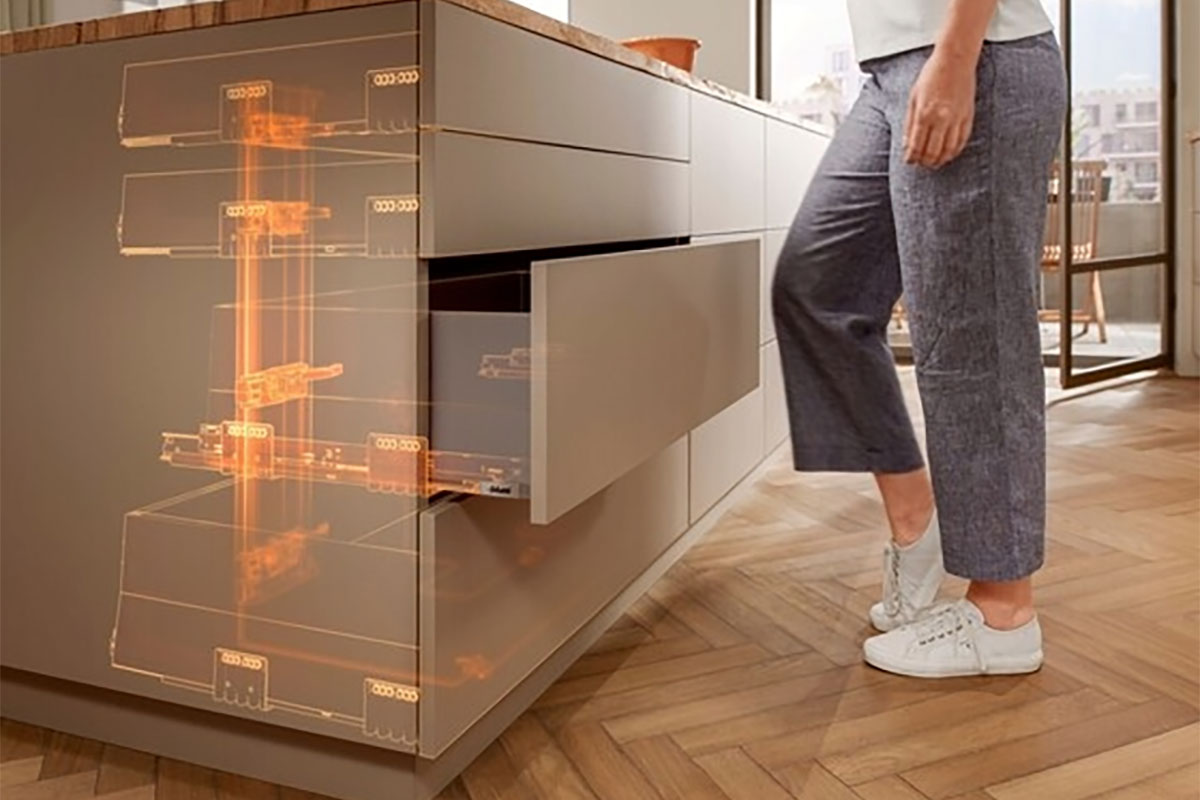
Photo Credit: Blum
Some design features are about how a space looks. Others are about how it feels to use every day. Servo-Drive falls squarely into the second category.
At Beyond the Box, we see Servo-Drive as a functional upgrade that, when used intentionally, can simplify movement, reduce visual clutter, and elevate the overall experience of a space — not just make it feel “high tech.”
What Is Servo-Drive?
Servo-Drive is a touch-to-open, motorized hardware system that allows cabinet doors and drawers to open with a light press — no handles required. A gentle push activates the motor, and the cabinet opens smoothly and quietly.
Servo-Drive systems are most commonly paired with:
- Lift-up cabinet doors
- Drawers
- Pull-outs
- Handle-less cabinetry designs
Many systems are offered by premium hardware manufacturers such as Blum and are designed to integrate seamlessly into modern cabinetry.
Why Designers Use Servo-Drive
Servo-Drive isn’t about convenience alone — it supports intentional design choices.
allows for:
- Clean, uninterrupted cabinet faces
- Handle-less or minimal hardware designs
- Easier access when hands are full
- A more fluid, intuitive user experience
BTB Perspective: Servo-Drive works best when it’s supporting a design goal — not when it’s added “just because.”
Where Servo-Drive Makes the Most Sense
Lift-Up Upper Cabinets
Perfect for:
- Coffee stations
- Appliance garages
- Upper cabinets over prep zones
Why it works:
Lift-up doors paired with Servo-Drive open effortlessly and stay out of the way while in use. A light tap with a hand, elbow, or hip is often all that’s needed.
BTB Tip: This is one of the most practical and satisfying applications of Servo-Drive.
Handle-Less Cabinetry
Perfect for:
- Modern or contemporary interiors
- Minimalist designs
- Spaces prioritizing visual calm
Why it works:
Servo-Drive allows cabinetry to remain visually clean while still being easy to use.
BTB Tip: Handle-less design should still feel intuitive — Servo-Drive helps make that possible.
One of the Most Practical Uses of Servo-Drive: The Waste Pull-Out
One of the most common — and most appreciated — places we use Servo-Drive is on the waste and recycling pull-out.
Picture this:
You’re mid-prep. You’ve just cut raw chicken. Your hands are messy, wet, and definitely not something you want touching cabinet hardware.
With Servo-Drive, you simply:
- Tap the cabinet front with your knee, hip, or elbow
- The waste pull-out opens smoothly
- You dispose of scraps hands-free
- No handles. No mess. No cross-contamination.
This is one of those features that doesn’t feel flashy — it just quietly makes daily life easier.
BTB Tip: If there’s one place we consistently recommend Servo-Drive, this is it.
Why Servo-Drive Works So Well on Waste Pull-Outs
It solves multiple problems at once:
- Keeps cabinet fronts cleaner
- Improves kitchen hygiene
- Eliminates the need to touch hardware mid-cooking
- Works seamlessly with handle-less or minimal designs
Unlike some upgrades that are about aesthetics, this one is about function and flow — especially in busy kitchens.
Design & Planning Considerations
Before incorporating Servo-Drive, we always look at:
- Cabinet type (drawer, lift-up, pull-out)
- Frequency of use
- User height and reach
- Electrical access and planning
- Overall design intent
Servo-Drive works best when it’s planned early, not added as an afterthought.
Final Thought
Servo-Drive isn’t about gadgets or trends. It’s about designing spaces that respond to how people actually live.
When used thoughtfully, it fades into the background — and that’s exactly what makes it powerful.
If you’re considering Servo-Drive for your project, our role is to help you decide where it adds value — and where it doesn’t — so the finished space feels effortless, not overengineered.
